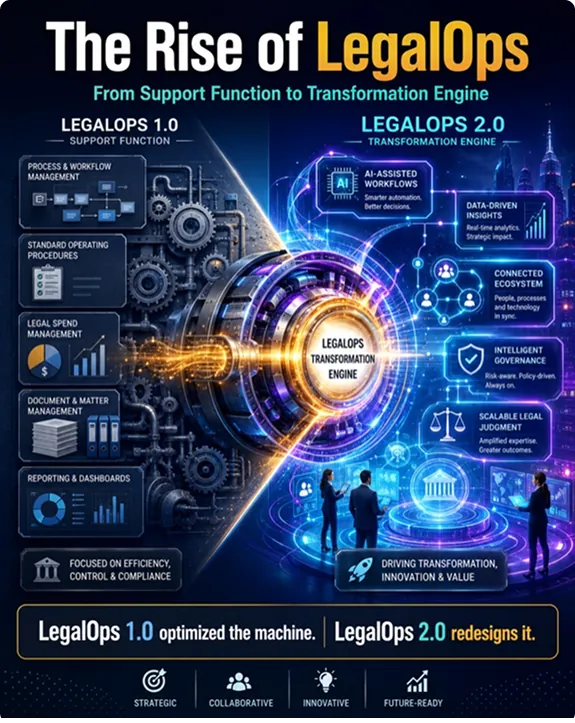
Move Faster or Get Bypassed: AI Is Raising the Cost of a Slow Legal Department
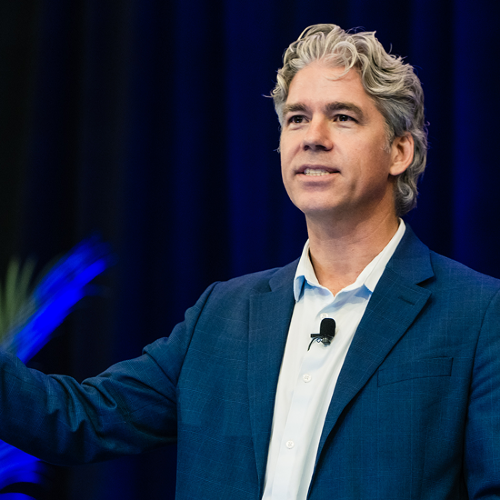
If legal departments cannot keep pace with the business, AI is making it increasingly easy for business units to Tnd another way forward, including buying legal technology and handling work without the lawyers.
Michael Voutsinas, chief of staff and managing director of Phillips 66, learned that lesson when one business unit, frustrated with the pace of legal support, began procuring a legal product to handle contracts on its own.
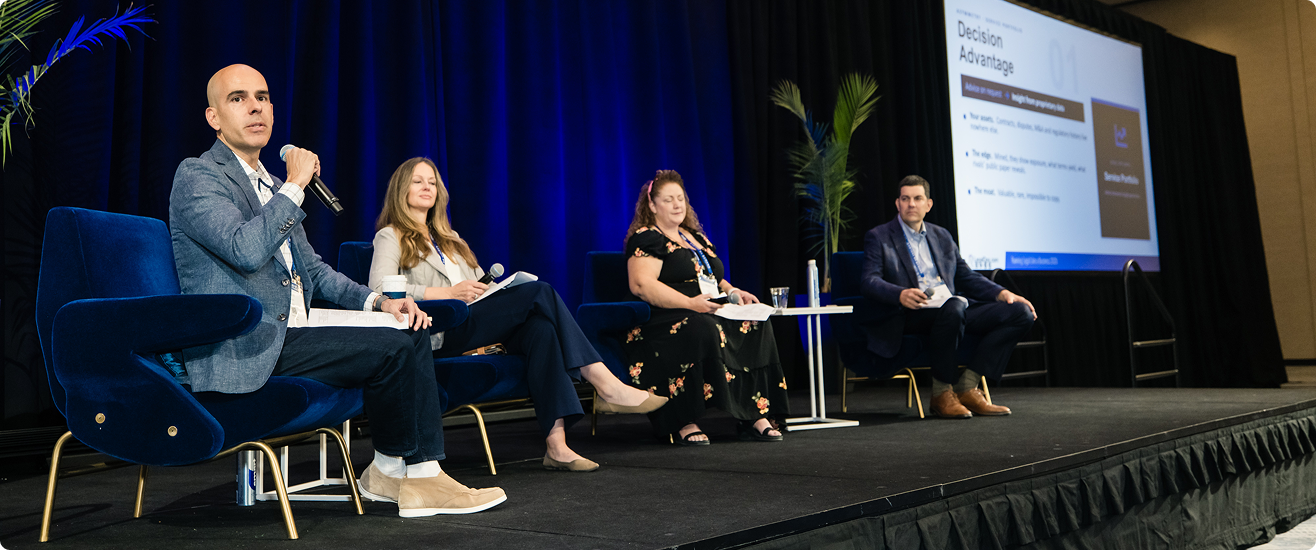
“They felt like we weren't fast enough. We weren't engaging quick enough. We weren't bringing the value we needed,” Voutsinas said Thursday at the Running Legal Like a Business Conference in Las Vegas.
The business unit made it through much of the procurement process before legal learned what was happening and stopped it, he said.“They will find a solution, they will move forward, with or without us,” Voutsinas said.
That experience helped frame a broader argument during the session, “Legal Operations Leadership 2030: Legal as an Engine of Competitive Advantage”: AI should not simply make legal departments more efficient. It should help move legal expertise, data and risk intelligence closer to the point where the business makes decisions.
Marcelo Peviani, VP of legal operations & strategic services at Equinix, said the ambition cannot be merely making the legal organization 10% or 20% faster.“We're looking at 20x,” he said.
For Peviani, that requires separating legal expertise from the idea that a lawyer must personally touch every transaction. Instead, departments can use their historical data to build standardized workflows that reflect the risks the company is prepared to accept.
“The delivery of legal services should be agnostic of the presence of a legal professional in that process,” he said. “It should be about the intelligence that we deliver at the point of the decision-making by the business.”
That intelligence is already sitting inside many legal departments. Contracts, regulatory matters, disputes and M&A history can provide proprietary information that competitors do not have and general-purpose AI models were not trained on, panelists said. The opportunity is to turn that Law.com Products & Resources Law.com Compass Radar VerdictSearch Scholar China Law & Practice CLE Center information that competitors do not have and general-purpose AI models were not trained on, panelists said. The opportunity is to turn that information into something the business can use.
At Cargill, that approach helped unlock a contract that had been sitting for months because the lawyers working on it believed the proposed terms presented too much risk, Carol Bouw, the company's head of global legal operations, said. When the company's chief legal officer asked the team to use an AI contract-insights tool to determine whether Cargill had accepted similar terms elsewhere, the data showed that it had.
“It shouldn't depend on any one lawyer's perspective or experience to be informing decision making when we have access to these broader data setsand information”
The company was then able to reach terms with the customer much faster than the roughly 12 months the agreement had been stalled, she said.
For legal-operations leaders, that means reconsidering not only technology but the department's role. Instead of reporting activity such as the number of contracts completed, Michelle Shores, senior director of legal operations and strategy at GoPro, said legal teams should connect their work to business outcomes and determine which services legal should own, enable, automate or stop doing.
Peviani cautioned that AI itself will not be a differentiator for long. “If everybody's buying the same AI solutions, it's no longer a differentiation. It becomes just table stakes.”
What can differentiate a legal department, he added, is combining AI with information and process knowledge unique to the company. And the price of waiting may be more than lost efficiency.
As Voutsinas' experience showed, internal clients no longer necessarily have to wait for legal to catch up.“The takeaway here is don't let that happen,” he said. “Go the other way and be at the table, be at the front of it.”
The Companion Piece
The Spark Guide: A checklist for meetings that matter
A tool I put together to help you ensure that you are building an experience that will spark
something real.
Take the Spark Guide with you. Your copy is right here.