When $4,000 of Legal Work Takes 45 Seconds, the Billable Hour Has a Math Problem
If artifcial intelligence can perform in 45 seconds legal work that might once have generated a $4,000 bill, corporate clients and their law firms have a rather consequential question to answer: What exactly should the client be paying for?
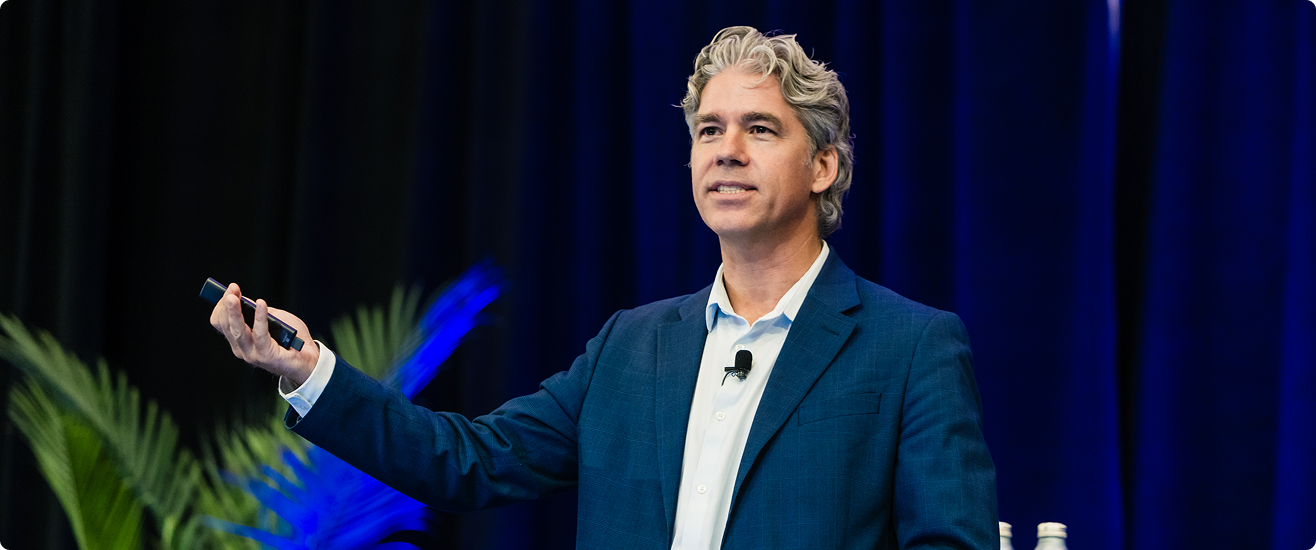
“How long would that take your typical associate?” Damien Riehl, vice president and solutions champion at Clio, asked after demonstrating an AI-enabled litigation workflow. “And the law firms, if they charge, bill 500 an hour, maybe $4,000, how are law firms going to charge for 45 seconds worth of prompt?”
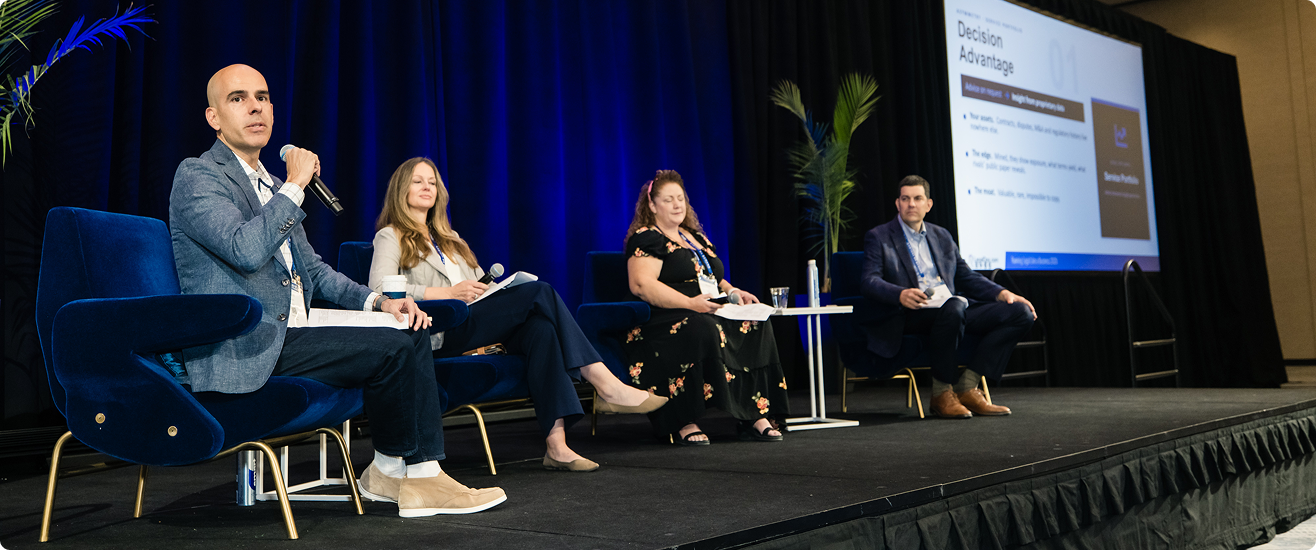
Riehl raised the question during a session at the Running Legal Like a Business Conference in Las Vegas on Tuesday. The session, titled “Rise of the Agents: Real-World, Practical Use Cases to Ship Outcomes, Not Architecture,” focused on moving the conversation around agentic AI away from definitions and toward practical results.
He demonstrated how AI tools can analyze litigation arguments, identify elements of claims and generate questions designed to elicit facts supporting those elements—all in less than a minute.
For corporate legal departments, that kind of speed could put new pressure on a billing model built around the amount of lawyer time required to complete a task. But Riehl stopped short of simply declaring the billable hour dead, a prediction the legal industry has heard many times before.
Instead, AI could strengthen the case for flat fees, changing the economics for clients and firms alike. Corporate legal departments have an incentive to push for pricing that reflects the efficiencies AI creates, while firms operating under fixed-fee arrangements could use the technology to reduce the cost of delivering the work and increase their margins.
The bigger issue, however, may be what happens to the value of lawyers themselves when AI can perform in seconds some of the analytical work that once consumed substantial amounts of their time.
““How much of what we lawyers do every day is truly judgment that we like to pride ourselves on, and how much is actually just intelligence?””
That distinction could become increasingly important for both in-house and outside lawyers. As AI absorbs more work that requires intelligence but not necessarily uniquely human judgment, lawyers may have to become clearer about the expertise they bring that technology cannot.
Riehl's approach doesn't involve turning an entire legal matter over to an autonomous AI agent. In fact, he argued that lawyers may be better off giving AI less autonomy when they already understand the steps necessary to complete a legal task.
“I don't need a bot to tell me what to do in some litigation,” he said. “I know what the tasks are. Don't let the bot do it. Just let me do it. And then after I define the tasks, let the bot execute those tasks, achieve those goals.”
For common and repeatable legal work, Riehl said lawyers can define the workflow themselves and let AI execute those predetermined tasks. More autonomous AI can then address issues that fall outside the established process.
He contrasted that approach with giving an AI agent a goal and allowing it to determine on its own which steps to take. The first, he argued, is far more predictable.
“What percentage of times is it going to get it right? Fifty, 70, 80?” Riehl said of the more autonomous approach. A lawyer-defined workflow, by comparison, “is going to get it 100% of the time.”
For legal departments, where a system that works most of the time may not be good enough, reliability can matter more than whether a particular technology meets someone's definition of “agentic.”
““Whether it's agentic or not doesn't matter if the … thing works””
Rather than beginning with the technology, Riehl urged legal teams to identify the work they want AI to accomplish.
“We should be saying, what are the problems we want to solve, what are the tools to solve them?” he said. “I want AI to 'blank.' Whatever fills in that blank, that's the ideation.”
As more of those blanks become tasks AI can perform quickly and reliably, the economics of legal work could become increasingly difficult to separate from the question of what lawyers themselves uniquely contribute.
For Riehl, that leaves the profession with a question that goes well beyond whether an associate can complete a task faster. “What judgment am I going to provide that the AIs can't provide themselves?”
The Companion Piece
The Spark Guide: A checklist for meetings that matter
A tool I put together to help you ensure that you are building an experience that will spark
something real.
Take the Spark Guide with you. Your copy is right here.